
Applying a professional boat coating makes cleaning water spots, dirt, and marine contaminants significantly easier by forming an ultra-hydrophobic, slick protective barrier over the vessel’s exterior. This nano-ceramic shield seals porous gelcoat and painted surfaces, preventing mineral deposits, salt crystals, grime, and bio-fouling from bonding directly to the hull. As a result, marine buildup releases effortlessly during routine washdowns using minimal effort and gentle, eco-friendly soaps.
Understanding Marine Contaminants and Gelcoat Degradation
Owning a watercraft provides unmatched freedom on the water, but marine environments present relentless challenges to your boat’s exterior surfaces. Factory gelcoat and painted hulls feature microscopic pores and natural surface irregularities. When your vessel glides through coastal waters or rests in a slip, saltwater, hard water minerals, marine growth, oil residues, and exhaust soot settle into these micro-cavities.
Over time, sunlight bakes these contaminants into the substrate. Sun exposure causes gelcoat oxidation, transforming bright finish colors into dull, chalky surfaces. Water drops act as magnifying lenses for solar heat; as the moisture evaporates, calcium and magnesium minerals remain behind, forming stubborn water spots that etch permanently into unsealed finishes.
Without a durable surface barrier, removing this buildup requires aggressive compounding, harsh acid washes, and heavy polishing. This frequent mechanical abrasion thins out the protective outer layer of your vessel, accelerating future deterioration and diminishing overall resale value.
How Advanced Coating Solutions Protect Hull Surfaces
Modern boat coating technology relies on silicon dioxide (SiO2) or graphene nano-structures that cross-link directly with gelcoat and paint at a molecular level. Rather than sitting loosely on top of the surface like conventional marine wax, an advanced coating fills in microscopic pits, valleys, and pores to create a sleek, uniform top coat.
This engineering delivers several core maintenance advantages:
- Extreme Hydrophobicity: Water sheets off rapidly, taking surface debris, salt, and loose organic dirt along with it.
- High Chemical Resistance: Formulations protect gelcoat from acidic bird droppings, harsh detergent exposure, diesel exhaust stains, and mineral etching.
- Enhanced UV Defense: Integrated UV blockers mitigate solar oxidation, preventing white gelcoats from yellowing and preserving deep color pigments.
- Thermal Tolerance: The smooth finish resists high-temperature engine exhaust staining around transom outlets.
When you invest in protective applications for a center console or luxury yacht, everyday debris lacks an anchor point to attach to. Consequently, maintenance shifts from grueling manual labor to standard, simple rinse cycles.
Our Complete Protection Process and Specialized Care
Delivering long-lasting hydrophobic performance requires far more than wiping a chemical product onto a hull. Achieving an enduring bond demands rigorous surface preparation and exact application protocols tailored to maritime conditions.
Professional Expertise
Proper surface conditioning forms the foundation of any long-term protective treatment. Marine surfaces must undergo extensive decontamination including thorough salt neutralization, iron removal, and multi-stage clay bar treatments to extract embedded grit. Marine technicians then carry out specialized paint correction and machine compounding to eliminate existing oxidation, swirl marks, and etching. Coating over existing flaws seals defects underneath, which is why meticulous prep work remains essential.
High-Quality Products
Standard automotive products cannot withstand the extreme environment of coastal marine use. Specialized marine ceramic and graphene coatings feature higher solids content and flexible polymer matrices engineered specifically for high-salinity exposure and thermal expansion. During recent surface restoration audits for vessel owners seeking reliable boat coating in Little River, SC, applying these commercial-grade marine formulas proved vital for resisting high-velocity water friction and relentless saltwater immersion.
Custom Solutions
Every vessel experiences different operational stresses based on hull composition, water conditions, and storage arrangements. A trailered vessel stored in a covered slip requires a distinct protection strategy compared to a yacht moored permanently in salt water. Professional technicians evaluate gelcoat thickness, substrate age, and usage patterns to select precise coating thicknesses and multi-layered protection schedules customized to your vessel’s needs.
Local Understanding
Coastal waters present specific environmental threats, including high salt concentrations, brackish tide shifts, seasonal pollen bursts, and intense humidity. Boat owners operating around Surfside Beach face constant sun exposure paired with abrasive windblown sand. Tailoring application curing times and environmental controls to regional coastal weather ensures the protective layer bonds flawlessly and delivers optimal lifespan.
Exceptional Service
Comprehensive marine care extends beyond the initial application. Professional detailers guide boat owners through long-term maintenance practices, recommended wash soaps, and inspect the coating periodically to verify hydrophobic performance. This dedicated partnership ensures your vessel maintains a showroom finish throughout every boating season.
Step-by-Step Guidelines for Effortless Post-Coating Washdowns
Once your vessel features a cured nano-ceramic coating, cleaning routines become remarkably straightforward. Following a streamlined protocol keeps the surface looking immaculate while preserving the coating’s longevity.
- Rinse Thoroughly with Fresh Water: Begin by spraying the entire hull and deck with clean fresh water to float away surface salt crystals and loose dirt.
- Apply a pH-Neutral Marine Shampoo: Use a gentle, ceramic-safe boat soap mixed in a bucket of fresh water. Avoid harsh dish detergents or heavy-duty degreasers, as these are unnecessary on coated surfaces.
- Wash gently with Soft Microfiber: Lightly glide a soft microfiber wash pad or ultra-soft marine brush over the hull. Because dirt cannot adhere strongly to the hydrophobic layer, light pressure is all that is required to lift grime.
- Rinse Away Suds: Flush the vessel from top to bottom with low-pressure fresh water to remove soap residue completely.
- Dry Using Absorbent Towels or Air Blowers: Use clean plush microfiber drying towels or a dedicated marine leaf blower to remove residual water droplets, eliminating any chance of mineral spotting from municipal water sources.
By eliminating the need for aggressive scrubbing pads, heavy compounding, and frequent paste waxing, you save valuable time after every outing while extending the life of your hull’s finish.
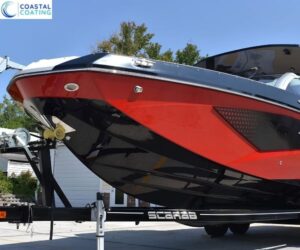
Comparing Conventional Marine Wax vs. Professional Boat Coating
Understanding the functional differences between legacy wax products and modern nano-coatings clarifies why maintenance becomes so much easier with modern surface treatments.
| Performance Feature | Conventional Marine Wax | Professional Marine Coating |
| Primary Composition | Carnauba wax or synthetic polymers | Silicon Dioxide (SiO2) or Graphene |
| Surface Attachment | Rests loosely on top of gelcoat | Chemically bonds to surface pores |
| Durability | 1 to 3 months | 2 to 5+ years with proper care |
| Melting Point / Heat Resistance | Low (melts under intense summer sun) | High (withstands severe sun and engine heat) |
| Chemical Resistance | Weak against detergents and acids | Strong against salt, acids, and soaps |
| Hydrophobic Effect | Moderate water beading initially | Extreme water shedding and self-cleaning |
| Ease of Washing | Requires moderate scrubbing | Effortless, low-pressure washdown |
While marine wax offers temporary gloss, it breaks down rapidly under intense heat, saltwater spray, and routine washings. A high-grade coating provides a durable glass-like shield that stands up to harsh ocean elements season after season.
Preserving Long-Term Hull Value and Exterior Appearance
A watercraft represents a substantial financial commitment, and maintaining its cosmetic condition directly protects its market value. Hull oxidation, tea-staining along stainless fittings, and permanent water etching significantly penalize a boat’s appraisal value during resale or trade-in evaluations.
Whether managing a personal sports fisher near Surfside Beach or scheduling professional boat coating in Little River, applying an advanced surface barrier eliminates the costly cycle of annual heavy restoration detailing. Protecting gelcoat beneath a clear, durable barrier ensures that seasonal maintenance consists of brief, simple cleanings rather than exhausting correction projects.
Frequently Asked Questions
How does a protective coating prevent marine water spots on gelcoat? It seals porous gelcoat with a non-porous barrier so mineral-rich water sheets off instead of pooling. Remaining drops sit on top without etching, allowing quick, effortless wipe-downs.
Will a nano-ceramic finish eliminate the need to wash my vessel? No. While its hydrophobic effect repels dirt and simplifies cleanup, routine freshwater rinses and mild soap washes are still required to clear salt and scum.
How often do marine coatings need to be reapplied compared to boat wax? Boat wax melts in heat and salt, requiring reapplication every 2 to 3 months. Ceramic coatings bond to the surface, delivering hydrophobic and UV protection that lasts several years..
Protect Your Marine Investment with Expert Local Solutions
Maintaining your vessel’s pristine appearance shouldn’t consume all your free time. At Coastal Coating, we are dedicated professionals specializing in professional-grade ceramic and graphene coatings, precise paint correction, and comprehensive detailing for boats, cars, RVs, and motorcycles. Our mission is to keep your valuable assets looking as good as new while shielding them from severe UV rays, saltwater corrosion, and environmental hazards.
Whether you dock your vessel in Surfside Beach or require high-performance Little River boat coating solutions, our team delivers custom protection tailored to your watercraft’s exact needs, giving you total peace of mind on the water.
Ready to make cleaning your boat effortless and keep your hull protected for years to come? Contact us today to discover how our specialized marine coating services can preserve the beauty and value of your investment.