
Professional RV coating forms an ultra-durable, hydrophobic barrier that prevents water spots, dirt, and road grime from bonding to your vehicle’s gel coat or paint. By filling microscopic surface pores with advanced nano-ceramic or graphene compounds, this protective layer repels moisture and environmental contaminants while significantly reducing maintenance effort. Investing in high-grade coating preserves your RV’s gloss, shields against harsh UV oxidation, and extends the lifespan of exterior surfaces across thousands of miles.
Understanding How Environmental Elements Harm Your Exterior
Highway driving exposes an RV’s expansive gel coat and sidewalls to constant weather, UV rays, and road debris, leading to permanent paint degradation if left untreated.
- Water Spots: Hard rain and road spray leave behind calcium and magnesium deposits. As sun evaporates the moisture, these minerals etch into fiberglass, creating permanent rings that standard washing cannot remove.
- Road Grime & Bugs: High-speed travel forces atomized oils, tar, and acidic bug splatter onto front caps and skirts. Acids eat into clear coats while tar embeds into porous gel coats, causing deep staining.
Before applying an RV coating in Longs, technicians thoroughly decontaminate all exterior panels to lock out these harsh elements and ensure a permanent protective bond.
The Science of Hydrophobic Surface Protection
Understanding why specialized exterior coatings excel over temporary wax requires examining the molecular structure of vehicle finishes. Factory fiberglass gel coat and automotive paint look smooth to the naked eye, but under high magnification, the surface resembles a jagged landscape of peaks and microscopic valleys.
Unprotected Surface (Porous) Ceramic Coated Surface (Hydrophobic)
Water/Dirt Embedded Shedding Liquid & Grime
↓ ↓ ↓ ↓ ↓ ↓ ↓ ↓ ↓ ↓
┌─┐ ┌─┐ ┌─┐ ┌─┐ ┌─┐ ─────────────────────── ← Nano Barrier
│ └─┘ └─┘ └─┘ └─┘ │ ███████████████████████
└─────────────────┘ └─────────────────────┘
Traditional carnauba waxes merely sit on top of these microscopic imperfections. Because wax melts at relatively low temperatures, exposure to scorching summer heat quickly strips the layer away, leaving the vehicle exposed once again.
Modern nano-ceramic and graphene formulas bond chemically with the substrate. The nano-particles flow directly into every microscopic pore, curing into an optically clear, ultra-dense hydrophobic seal. This slick, non-porous structure dramatically changes surface tension:
- High Water Contact Angle: Water droplets can no longer spread flat or cling to the panel. Instead, they form tight, elevated beads.
- Self-Cleaning Effect: As water beads roll off vertical side panels during a rainstorm or rinse, they gather loose surface dust and fresh road grime with them.
- Chemical Resistance: Advanced liquid coatings resist extreme thermal variation and aggressive acid or alkaline contaminants (ranging from PH 2 to PH 12).
Core Advantages of Specialized Surface Preservation
1. Complete Elimination of Embedded Water Spots
Water spotting remains one of the most frustrating maintenance issues for motorhome owners. Rainwater dissolves atmospheric pollutants and salt particles, dropping them straight onto horizontal roof lines and caps. When vehicle owners invest in premium Longs RV coating, the cured liquid layer prevents these mineral deposits from etching into the clear coat. Because surface tension forces liquid into uniform droplets, water slides completely off vertical panels before drying can take place.
2. Resistance to Sticky Road Grime, Tar, and Oils
Long-haul driving subjects low front bumpers, wheel wells, and towed vehicles to thick road film. Asphalt binder emulsion, grease, and tire rubber create a sticky residue that ordinary shampoos cannot dissolve easily. A cured ceramic or graphene barrier acts as a non-stick shield. Grime cannot penetrate the cured nano-matrix, meaning high-pressure water rinses away heavy dirt without intense scrubbing that could scratch sensitive graphics.
3. Protection Against Insect Acids and Tree Sap
Bug splatter contains aggressive biological acids that begin etching into automotive clear coats within hours under direct sunlight. Likewise, tree sap creates hard, amber-like spots that crack underlying paint as they contract. Liquid ceramic barriers provide a sacrificial, chemical-resistant shell. Acidic substances remain suspended on top of the coating layer, giving you ample time to wipe them away effortlessly during routine washdowns.
4. Shielding Gel Coat Against UV Damage and Chalking
A fiberglass gel coat is particularly susceptible to ultraviolet degradation. Intense sun exposure breaks down the resin binder in fiberglass, leading to severe oxidation, color fading, and white powdery chalking. Premium surface treatments contain advanced UV inhibitors that block harmful radiation. By locking out oxygen and ultraviolet rays, the coating preserves deep color depth, gloss, and graphic vibrancy for years.
During a recent vehicle evaluation for a client in Carolina Forest, inspection confirmed how properly applied ceramic barriers stop oxidation even when an RV is stored outdoors year-round.
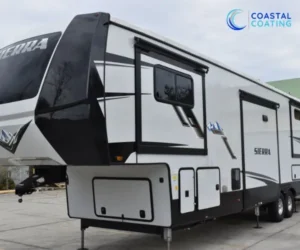
Comparing Protective Treatments
Choosing the right exterior protection strategy directly impacts how much time and effort you will invest in long-term maintenance. Below is a direct comparison between conventional waxes, standard polymer sealants, and professional ceramic coatings.
| Feature / Benefit | Traditional Wax | Polymer Paint Sealant | Professional Ceramic Coating |
| Durability Expectation | 1 to 3 Months | 4 to 6 Months | 3 to 7+ Years |
| Hydrophobic Rating | Moderate | Good | Exceptional (Self-cleaning) |
| Heat Resistance | Low (Melts under summer sun) | Moderate | Extreme (Resists intense heat) |
| Chemical Resistance | Weak against acids/alkalis | Fair protection | High resistance (PH 2 – PH 12) |
| UV Oxidation Defense | Minimal | Moderate | Maximum protection |
| Maintenance Effort | High (Frequent re-application) | Moderate | Low (Simple wash cycles) |
Our Exclusive Surface Protection Philosophy
Delivering long-lasting exterior protection requires far more than applying a product out of a bottle. Maintaining luxury motorhomes, fifth wheels, and travel trailers demands a disciplined approach tailored to heavy-duty exterior materials.
- Professional Expertise: Technicians evaluate paint thickness and gel coat porosity to execute precise paint correction tailored to fiberglass surfaces before applying an RV coating in Longs, SC.
- High-Quality Products: Industrial-strength and ceramic and graphene formulas create a long-lasting covalent bond that consumer sprays cannot match.
- Custom Solutions: Protection plans are tailored specifically to your RV’s type, storage setup, and unique exposure risks.
- Local Understanding: Service preparation directly addresses regional environmental factors, including salt air, high UV levels, and heavy rainfall.
- Exceptional Service: Transparent inspections, expert consultations, and post-care walkthroughs ensure complete long-term protection for your investment.
Recommended Maintenance Protocols for Coated Vehicles
While a liquid ceramic coating makes exterior maintenance significantly easier, establishing a gentle cleaning routine ensures maximum longevity for the protective layer.
- Use PH-Neutral Wash Shampoos: Avoid aggressive dish soaps or high-PH industrial degreasers that can degrade the slick top layer of the coating. Select dedicated, PH-balanced car or RV shampoos free from added waxes.
- Employ the Two-Bucket Wash Method: Use one bucket containing clean soapy water and a second bucket with fresh water to rinse dirt from your microfiber wash mitt. This prevents re-introducing trapped grit onto the finish.
- Avoid Abrasive Brushes: Standard coarse RV deck brushes create fine swirl marks and micro-scratches across vinyl graphics and clear coats. Stick to soft microfiber wash pads attached to telescoping poles.
- Perform Periodic Ceramic Boost Rinses: Every few months, apply a quick spray-and-wipe ceramic booster during washings to rejuvenate surface slickness and top off the hydrophobic layer.
People Also Ask
How long does a ceramic coating last on an RV?
Professionally installed ceramic coatings last 3 to 7+ years, depending on product quality, storage conditions, and proper wash maintenance.
Can you apply ceramic coating over RV decals and vinyl graphics?
Yes. Quality coatings seal graphic edges to prevent peeling while providing UV protection against drying, cracking, and fading.
What is the difference between a RV gel coat and regular car paint?
RV gel coat is a thick, porous resin that oxidizes quickly, while car paint uses a base coat sealed with a clear coat. Gel coat requires high-solids formulas designed for porous surfaces.
Is professional RV coating better than traditional waxing?
Yes. Wax melts quickly under heat, whereas ceramic coatings chemically bond to the surface to offer multi-year UV, chemical, and hydrophobic protection.
Protect Your Investment Today
Preserving the factory finish, vibrant graphics, and resale value of your RV requires proven, long-term exterior defense. At Coastal Coating, we specialize in delivering professional-grade ceramic protection tailored specifically for motorhomes, fifth wheels, and travel trailers. Whether you need comprehensive paint correction or complete ceramic protection, our dedicated team is here to ensure your vehicle stays protected against harsh weather, road grime, and water spots for years to come.
Contact us today to request a free quote or learn more about our specialized surface protection packages!