
A graphene coating is a ceramic coating with graphene added to the formula. Most graphene products use the same silica (SiO2) base as a standard ceramic coating, plus a small amount of graphene or graphene oxide. The real difference shows up in how water behaves on the paint and how slick the finish feels. It refines ceramic protection. It does not create a new category of protection. Both options protect paint from UV rays, salt air and road contaminants. The better choice depends on where the car is parked, how often it is washed and what bothers the owner most about the current finish. Coastal Coating applies both ceramic and graphene coatings in Myrtle Beach, so this guide lays out what each one does, what the science supports, and which claims are mostly marketing.
What Is a Ceramic Coating?
Ceramic coating is a liquid that is mostly silicon dioxide (SiO2), the main compound in glass, held in a solvent. After the paint is cleaned and corrected, the coating is spread over each panel. The solvent evaporates and the coating cures into a thin, hard, glass-like layer that forms a molecular bond with the clear coat. This process is central to professional ceramic coating in Myrtle Beach applications.
That cured layer is hydrophobic, which means it repels water. Water forms tight beads and runs off, carrying dirt with it. The coating also adds gloss and resists UV fading, oxidation, and chemical stains from bird droppings, tree sap, and road salt. It does not make paint scratch-proof, but it reduces minor wear and replaces the need for regular waxing. Our ceramic coating page notes that a properly maintained coating can last 3 to 7 years, depending on the product and the conditions it faces.
What Is a Graphene Coating?
Graphene is a single layer of carbon atoms arranged in a honeycomb pattern. In a lab, a pure sheet of graphene is extremely strong and moves heat very well. Pure graphene is also costly and hard to work with, so coating makers almost always use graphene oxide or reduced graphene oxide instead. These are flakes of carbon that mix into a liquid more easily.
Those flakes are blended into an SiO2 ceramic base. So in practice, a graphene coating is a graphene-enhanced ceramic coating. The ceramic part still forms the bond and does most of the protective work. The graphene changes the surface behavior. For drivers considering Myrtle Beach ceramic coating understanding this formulation helps explain how graphene-enhanced products differ from standard ceramic options.
Makers rarely publish how much graphene is in a bottle or which type they use. Two products with “graphene” on the label can perform very differently. That is one reason the product choice and the installer matter more than the word on the bottle.
What Graphene May Really Add
Some benefits are reasonable and line up with how the material behaves. They are real, but modest.
- Fewer water spots. Many graphene-enhanced formulas make the water sheet off or form flatter beads that slide away at a lower angle. Less water sits on the panel, so fewer minerals are left behind when drops dry.
- A slicker feel. Lower surface friction helps dust, pollen and salt film release during a wash with less rubbing.
- Slight flexibility. Some makers say graphene helps the cured layer flex with the paint as panels heat and cool. Most of this evidence comes from manufacturer testing, so treat it as possible and not proven.
Where the Marketing Goes Too Far
The impressive numbers about graphene describe a perfect single sheet in a lab. A coating that is mostly silica with a small share of graphene flakes does not take on those properties. Here are the claims worth questioning:
- “Stronger than steel” paint. No coating makes paint scratch-proof or chip-proof. Rock chips, keys, and brushes at automatic washes can still leave marks.
- Heat spreading that stops water spots. Some brands say graphene pulls heat across the panel so drops do not bake on. Real-world proof is thin. Washing in the shade and drying the car still matter more.
- Large jumps in lifespan. How long any coating lasts depends on prep, number of layers, curing, and care. The label alone does not decide it.
A fair summary: graphene-enhanced coatings are a legitimate product with a small edge in water behavior and slickness. They are not a different class of protection.
For drivers considering ceramic coating in Myrtle Beach, SC, understanding the actual benefits and limitations of each coating type can help set realistic expectations and choose the right paint protection for their vehicle.
Graphene vs. Ceramic Coating: Side-by-Side
| Feature | Standard ceramic (SiO2) | Graphene-enhanced ceramic |
|---|---|---|
| Base chemistry | Silica (SiO2) in a solvent | Silica base plus graphene or graphene oxide |
| Water behavior | Tight, round beads | Often sheets or flatter beads that roll off sooner |
| Water spot resistance | Good with proper care | Often slightly better, varies by product |
| Surface feel | Slick and glassy | Often slicker |
| Gloss | High gloss | Similar high gloss |
| Scratch protection | Resists minor wear, not scratch-proof | Same |
| UV, salt and chemical resistance | Yes | Yes, mainly from the ceramic base |
| Prep required | Full decontamination and paint correction | Same |
| Lifespan drivers | Product, prep, environment, care | Same |
How Coastal Conditions Change the Decision
Salt air, high humidity, strong UV and blowing sand are part of daily life on the Grand Strand. Both coating types are built to resist UV rays, saltwater and chemical exposure. Where they differ is how easily the surface sheds what lands on it. A few common situations:
- Parked outside near the ocean. Salt mist settles overnight and dries into a hazy film. A slick, fast-shedding surface lets a rinse carry more of it away, so graphene may have a small edge here.
- Sprinklers or hard water at home. Mineral spots are the main complaint. The way graphene coatings move water off the panel can help, though drying the car after a wash helps most.
- Garaged weekend car. A standard ceramic coating covers what this car faces. The graphene edge matters less when the car is rarely wet or in the sun.
- Dark paint in full sun. Both types include UV resistance. Paint condition before coating and regular washing will shape the result more than the coating type.
- Beach trips and sand. Neither coating stops scratches from wiping sand across the paint with a dry towel. Rinse first, then wash.
Frequently Asked Questions
Is graphene coating better than ceramic coating?
Graphene coating is slightly better in some areas, mainly water spot resistance and slickness. It uses the same ceramic base, so protection from UV, salt and chemicals is similar. For many cars, a well-applied standard ceramic coating in Myrtle Beach is all that is needed.
Does a graphene coating last longer than a ceramic coating?
Not by default. Lifespan depends on the specific product, how well the paint was prepped, how many layers were applied, and how the car is cared for. A ceramic coating in Myrtle Beach,SC installed with care can outlast a graphene coating installed poorly.
Can a graphene coating go over an existing ceramic coating?
It depends on the condition of the old coating. A new coating needs a clean, bare surface to bond well, so older protection is usually removed or refreshed during prep. Our team inspects the paint first and explains what the car needs.
Will either coating stop rock chips or scratches?
No. Both coatings help resist light wear and make the paint easier to clean, but neither makes paint chip-proof or scratch-proof. Safe washing habits still protect the finish.
What Matters More Than the Label
Any coating locks in the paint underneath it. If swirls and oxidation are not removed first, they stay visible under a fresh coating. That is why prep is the biggest factor in how a coated car looks and how long the coating holds up.
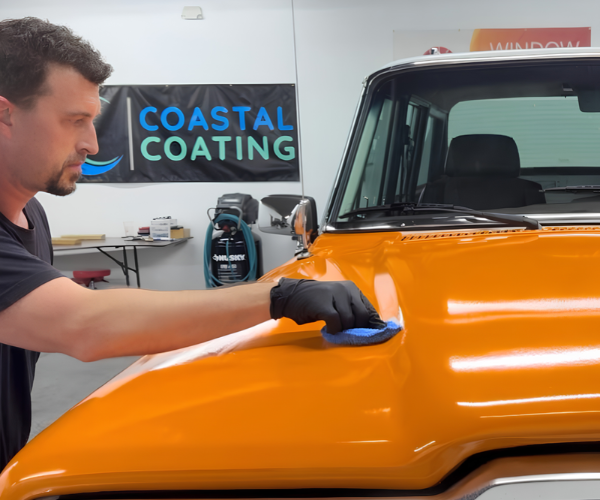
Our ceramic coating process follows six steps for both coating types:
- A full inspection of the paint and trouble spots.
- Paint correction to polish out swirls, scratches, and oxidation.
- A deep wash and decontamination that removes old waxes and sealants.
- Application in multiple layers for even coverage.
- Curing time so the coating can bond to the paint.
- A final inspection of every panel.
How to Choose Between Graphene and Ceramic
A few honest questions point to the right fit:
- Where does the car sit most nights: garage, carport, or open driveway?
- How often is it washed, and is it dried by hand?
- Are water spots a current frustration?
- How long will the car be kept?
- What shape is the paint in today?
At the consultation, our team looks at the paint, talks through these answers and recommends a ceramic or graphene option that fits the car and the way it is used. The goal is to protect your investment with the right product, without overselling features the car will not use.
Get a Free Quote for Ceramic or Graphene Coating
Choosing between graphene and ceramic is easier with the car in front of an expert. Coastal Coating serves Myrtle Beach and the surrounding Grand Strand communities, and every coating starts with an inspection and an honest recommendation.
Contact us today or request a free estimate.