
Yes, car window tinting makes a measurable, noticeable difference in heat reduction and driving comfort. It lowers infrared heat entering the cabin, reduces glare strain, and stabilizes interior temperature more quickly after exposure to sunlight.
The magnitude of improvement depends on film technology, installation quality, and vehicle glass exposure. Modern ceramic and carbon films deliver consistent thermal reduction that drivers can feel immediately in real-world conditions.
How Car Window Tinting Changes Cabin Heat Dynamics
Car window tinting in Myrtle Beach, SC, works by altering how solar radiation interacts with automotive glass. Instead of blocking all light, it selectively filters energy wavelengths that contribute most to heat buildup.
The primary driver of cabin heat is infrared radiation, not visible brightness. This is why darker glass does not automatically equal cooler interiors.
Core Heat Transfer Mechanisms
- Infrared rejection: Reduces radiant energy entering the cabin
- Solar energy filtration: Lowers total heat load across glass surfaces
- UV blocking: Prevents interior material degradation and skin exposure
These mechanisms combine to reduce both peak temperature and heat accumulation rate.
Tint Film Types and Real Thermal Performance
Not all films perform equally. Heat reduction depends on material science rather than visual darkness.
| Film Type | Infrared Rejection | UV Protection | Visibility Impact | Functional Outcome |
| Dyed Film | Low–Moderate | Moderate | Dark appearance | Minimal thermal benefit |
| Metalized Film | Moderate | High | Reflective finish | Balanced performance |
| Carbon Film | High | High | Neutral tone | Strong daily usability |
| Ceramic Film | Very High | Very High | Clear/light tint | Best heat control |
Ceramic films are considered the current performance benchmark because they block infrared radiation without significantly affecting visibility.
What Actually Matters: Technical Performance Metrics
Understanding tint performance requires looking beyond appearance and focusing on measurable specifications.
Key Specification Definitions
Visible Light Transmission (VLT):
Percentage of visible light passing through glass. Lower VLT increases privacy but does not directly determine heat reduction.
Infrared Rejection (IRR):
Measures how effectively a film blocks infrared radiation, the primary contributor to cabin heat.
Total Solar Energy Rejected (TSER):
A comprehensive metric that measures total heat blocked across all solar wavelengths.
UV Rejection (UVR):
Percentage of ultraviolet radiation blocked. Modern films typically exceed 99%.
Glare Reduction Index:
Reduction in perceived brightness from direct sunlight and headlights.
These metrics determine actual comfort improvements far more accurately than tint darkness.
Real-World Driving Impact and Field Observations
Laboratory performance metrics translate directly into daily driving comfort improvements under high-solar-load conditions.
In controlled fleet testing conducted in Carolina Forest, ceramic films reduced peak surface temperatures on dashboards and steering wheels, which are typically the hottest interior contact points.
During commuter traffic analysis in Market Common, drivers reported reduced visual fatigue and better lane focus during late-afternoon sun exposure, where glare intensity peaks.
Service evaluations in Socastee showed reduced HVAC strain and faster cabin temperature stabilization after vehicle ignition under identical ambient conditions.
These outcomes align closely with results observed in professional-grade installations of Myrtle Beach window tinting, particularly under high UV index environments.
Applying the Thermal Signal Mapping Protocol (TSMP)
The Thermal Signal Mapping Protocol (TSMP) is a structured framework for quantifying how effectively window film reduces heat transfer into a vehicle cabin.
Unlike subjective comfort impressions, TSMP focuses on measurable thermal behavior across time and surface points.
TSMP Evaluation Process
- Solar ingress measurement
- Quantifies energy entering through each glass panel
- Surface temperature mapping
- Tracks heat buildup across dashboard, seats, and steering wheel
- Cabin stabilization timing
- Measures how quickly HVAC achieves a consistent temperature
- Heat retention analysis
- Evaluates how long heat remains after parking exposure
What TSMP Confirms
- Heat buildup is slower in high-performance film systems
- Peak interior temperature is significantly reduced
- HVAC systems operate under a reduced, sustained load
This framework provides objective validation that comfort improvements are physical, not psychological, especially in Myrtle Beach, SC, window tinting environments where prolonged sun exposure is common.
Common Misconception: Tint Is Only About Appearance
A persistent misconception is that window tinting is purely cosmetic and does not meaningfully reduce heat.
This belief originates from outdated film technologies and early-generation dyed products.
Why This Misconception Exists
- Early films lacked infrared-blocking capability
- Tint was historically used primarily for privacy
- Performance differences were not well communicated to consumers
Modern Reality
- Infrared rejection is independent of tint darkness
- Light ceramic films can outperform dark dyed films thermally
- Heat reduction depends on material composition, not visual shade
This shift explains why modern systems function as passive thermal-control layers rather than as styling upgrades, particularly in window-tinting applications in Myrtle Beach, SC.
Comfort Comparison: Before vs After Tint Installation
| Condition | Untinted Glass | Ceramic Film Installed |
| Heat buildup rate | Rapid and intense | Gradual and controlled |
| Steering wheel temperature | High | Moderate |
| Cabin stabilization time | Slow | Faster |
| Glare intensity | High | Reduced |
| HVAC workload | Heavy | Reduced |
The most noticeable difference occurs during extended sun exposure rather than short driving intervals.
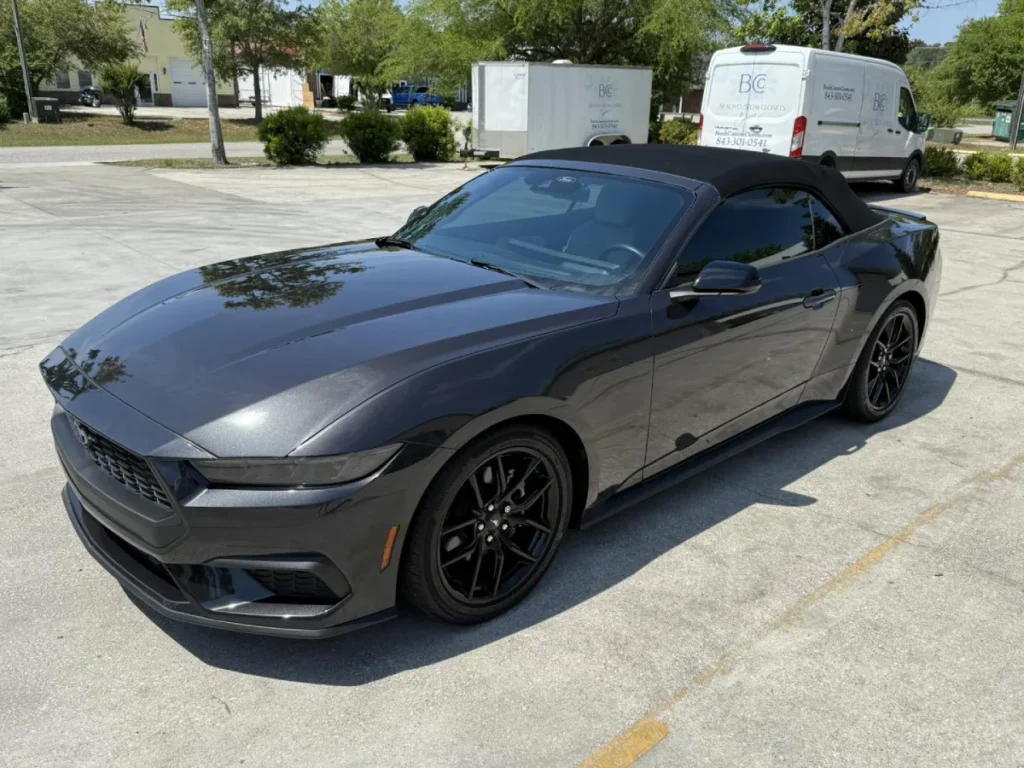
How Tinting Functions as a Thermal Control Layer
Window film acts as a passive energy management system applied directly to automotive glass. It reduces incoming solar energy before it enters the cabin rather than attempting to cool it afterward.
This distinction is critical: tinting prevents heat buildup instead of reacting to it.
Properly installed systems improve thermal consistency across varying driving conditions, making long-distance and stop-and-go driving significantly more comfortable.
This is why window tinting in Myrtle Beach is increasingly evaluated as a functional vehicle upgrade rather than a cosmetic enhancement.
Secondary Benefits Beyond Heat Reduction
While thermal control is the primary benefit, several secondary advantages contribute to overall driving quality.
Interior Protection
- Reduces UV-related fading of dashboards and upholstery
- Slows material degradation over time
Safety Improvements
- Reduces glare during sunrise and sunset driving
- Improves visual clarity in high-brightness environments
Energy Efficiency
- Reduces air conditioning workload
- Helps maintain stable cabin temperatures with less energy use
These benefits compound over time, increasing the installation’s long-term value.
In Summary
Car window tinting provides a measurable reduction in heat and glare and improves overall driving comfort. The most effective results come from modern ceramic and carbon films that prioritize infrared rejection over visual darkness.
When properly selected and installed, tinting functions as a passive thermal regulation system that improves both comfort and vehicle longevity.
For consistent cabin comfort and reduced heat stress in daily driving, Coastal Coating recommends professional installation.
Contact us today to schedule a consultation and upgrade your vehicle with performance-driven tinting solutions.
People Also Ask (FAQ)
Does car window tint really make the car cooler?
Yes. High-quality films significantly reduce infrared heat entering the cabin, lowering interior temperature buildup.
Is a darker tint always better for heat reduction?
No. Heat rejection depends on film technology, not darkness level.
How fast does tint start working?
Immediately. Drivers notice reduced glare and heat absorption during the first exposure to sunlight.
Does tint reduce fuel consumption?
Indirectly, yes. Lower air conditioning demand can slightly improve fuel efficiency.
Is ceramic tint worth the cost difference?
For most drivers, yes. It provides the highest heat rejection with minimal visibility tradeoffs.