
Professional outdoor protective systems differ from DIY finishes through their multi-layer chemical composition, deep substrate adhesion, and specialized resistance to high thermal and environmental stress. While off-the-shelf sealers provide a temporary surface barrier, commercial-grade polyaspartic and ceramic formulas penetrate stone, concrete, and stainless steel to create an impervious seal. This industrial bonding prevents chemical degradation, UV fading, and moisture damage for years rather than months.
Understanding the Chemical Composition of Outdoor Finishes
The main difference between professional coatings and off-the-shelf sealers comes down to chemistry. Standard store-bought sealers are single-component acrylics or silicones that simply dry on the surface, leaving a thin film prone to peeling, cracking, and quick wear.
Commercial systems use two-part reactive chemistries like cross-linking polyaspartics, urethanes, or ceramics that chemically cure and sink deep into surface pores. Instead of sitting on top, they cross-link into a rigid matrix that won’t chip, peel, or delaminate under harsh weather.
Comparing DIY and Commercial Performance Factors
| Feature / Metric | DIY Protective Finishes | Professional Coating Systems |
| Primary Chemical Base | Acrylic, Silicone, or Water-Based Resins | Polyaspartic, Ceramic, Aliphatic Urethane |
| Surface Bonding | Mechanical surface film | Molecular penetration and cross-linking |
| Thermal Resistance | Low to Moderate (Prone to heat damage near grills) | High (Engineered to withstand direct contact heat) |
| UV Stability | Degrades, yellows, and chalks within 6–12 months | Complete UV light resistance; non-yellowing |
| Chemical & Stain Resistance | Short-term barrier against light liquid spills | Impervious to grease, acid, wine, and oils |
| Maintenance Cycle | Requires reapplication every season | Multi-year performance with simple routine cleaning |
Mechanical Adhesion and Surface Preparation
A coating only performs as well as the surface prep beneath it. Basic DIY methods like hand scrubbing or degreasing remove loose debris but fail to open the pores of dense concrete, granite, or stone veneer, leading to weak surface bonding. Professional technicians use diamond grinding or shot-blasting to remove contaminants and create a deep mechanical profile for maximum adhesion. During a recent audit for a firm in Carolina Forest, SC, our team noted that mechanical diamond grinding increased coating adhesion by over three hundred percent compared to standard wash treatments.
Thermal Tolerance Around Cooking Equipment
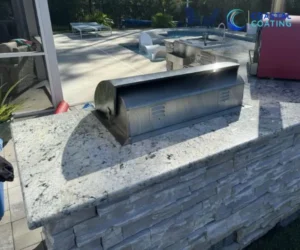
Outdoor kitchens face extreme temperature shifts from nearby grills, smokers, and pizza ovens. Standard DIY acrylic and epoxy finishes soft-melt, scorch, or discolor when exposed to high radiant heat or hot cookware. Commercial polyaspartic and ceramic formulas withstand direct thermal stress and sudden rain, preventing cracking, softening, or heat damage.
Resistance to Staining, UV Exposure, and Moisture
Spilled oils, wine, and acids quickly penetrate weak DIY sealers, causing permanent substrate stains. Direct sunlight also breaks down standard acrylics, leading to yellowing, clouding, and flaking. Industrial-grade coatings create a fully impervious barrier with built-in UV stabilizers, allowing spills to wipe away easily while keeping surfaces protected against fading and moisture damage.
Service Standards and Application Methodology
Delivering long-lasting exterior protection requires more than just high-grade chemicals; it demands an integrated, professional approach to system design and application.
- Professional Expertise: Technicians assess environmental factors like humidity, surface temperature, and concrete moisture emissions to ensure a precise, durable cure.
- High-Quality Products: Access to industrial-grade resins, hardeners, and ceramic compounds not found in retail stores.
- Custom Solutions: Formulations are tailored to the exact porosity and demands of your material, whether travertine, granite, or concrete.
- Local Understanding: Climate-specific applications resist local environmental stressors like coastal salt spray, high humidity, and intense summer heat. While evaluating a residential space in Longs, our technicians selected a salt-resistant aliphatic formulation to prevent moisture-driven efflorescence in the outdoor masonry.
- Exceptional Service: Strict application protocols eliminate common DIY pitfalls like bubbling, uneven thickness, and improper curing.
Long-Term Value and Maintenance
While purchasing a DIY sealer has a lower upfront cost, the true price becomes clear over time. Off-the-shelf sealers demand frequent reapplication often once or twice a year along with repeated surface stripping to clear degraded layers. Over five to ten years, the cumulative cost of materials, labor, and potential repairs to damaged stone far exceeds the initial investment of a professional system.
Commercial coatings eliminate this continuous maintenance cycle. Their non-porous finish prevents mold, mildew, and algae growth in damp environments, simplifying routine upkeep. A simple wash with mild soap and water removes grease and dirt, keeping outdoor counters, islands, and structures looking clean year after year.
Property owners who choose a premium Carolina Forest outdoor kitchen coating benefit from these rigorous application standards, ensuring their hardscape surfaces maintain high durability despite heavy coastal rains and summer heat.
Key Installation Steps Compared
To understand why commercial finishes last so long, consider the differences in application protocol:
- Substrate Inspection and Testing: Commercial application begins with moisture testing and structural checks to confirm surface readiness.
- Deep Cleaning and Profiling: Technicians clear oil, old sealers, and organic growth, then mechanically grind the substrate to create an ideal surface profile.
- Moisture Mitigation: A specialized primer is applied to stop vapor pressure from lifting the coating from below.
- Base and Build Coats: Reactive resin layers are applied in controlled thicknesses to ensure uniform coverage and deep penetration.
- Topcoat Application: A high-performance, non-yellowing clear coat is applied to provide maximum resistance against scratches, stains, and UV rays.
In contrast, DIY projects skip mechanical profiling and moisture mitigation, leaving the finish vulnerable to premature peeling, blistering, and wearing.
Applying a high-grade outdoor kitchen coating in Carolina Forest, SC involves these exact structural protection protocols to prevent saltwater erosion and UV breakdown.
Selecting the Right Protection Strategy
Selecting the proper protective strategy depends on your long-term goals for your outdoor space. Homeowners seeking a temporary fix for a single season may find basic store-bought sealers sufficient. However, for those who have invested heavily in high-end outdoor kitchens, custom hardscapes, and premium appliances, commercial coating systems provide the durability required to protect that investment.
A professional application guards natural stone, masonry, and concrete against deep oil stains, thermal stress cracking, and UV degradation. Working with experienced technicians ensures the surface receives correct prep work, environmental controls, and high-performance materials suited for your climate.
Homeowners who want to preserve their outdoor living spaces benefit from choosing professional protective solutions. Whether updating an existing structure or sealing a new build, investing in an outdoor kitchen coating in Carolina Forest delivers long-term protection, easy cleaning, and lasting value.
Frequently Asked Questions
How often should an outdoor kitchen coating be reapplied?
DIY protective finishes usually require reapplication every 6 to 12 months due to UV wear and chemical breakdown. Professional-grade polyaspartic or ceramic coating systems, when applied correctly, last 5 to 10 years or more before needing a maintenance topcoat.
Can you seal outdoor kitchen countertops yourself?
While DIY sealers are widely available, they lack the chemical cross-linking and thermal tolerance of commercial systems. DIY applications also lack mechanical surface grinding, which can cause the sealer to peel, yellow, or fail when exposed to high heat from grills or intense sun.
Are outdoor kitchen coatings heat resistant?
Commercial outdoor kitchen coatings are specifically engineered to withstand direct heat and thermal shock around grills, smokers, and hot cookware. DIY acrylics or standard epoxies often melt, soften, or discolor when exposed to high temperatures.
Will a professional coating change the appearance of my stone or concrete?
Professional systems offer versatile aesthetic options. You can select an invisible matte finish that preserves the natural look of the material, a high-gloss finish, or a color-enhancing sheen that brings out the deep tones of natural stone.
Protect Your Outdoor Investment
Preserve the beauty and value of your outdoor living space with high-performance protective solutions designed for maximum durability. At Coastal Coating, our team brings professional expertise, high-grade products, and custom application strategies to protect your outdoor kitchen from harsh sunlight, high temperatures, moisture, and staining.
Whether you need to seal new countertops or restore an existing outdoor entertainment area, we provide long-lasting, commercial-grade surface protection tailored to your property.
To explore your options or request a free quote, contact us today and learn how our advanced coating systems keep your investments looking as good as new for years to come.